
IBISWorld Platform
Answer any industry question in minutes with our entire database at your fingertips.

IBISWorld anticipates residential housing loan rates to decrease by 0.36 percentage points in 2025-26 to average 8.28% over the year. The cash rate significantly influences home loan rates. When the cash rate increases, the cost of borrowing rises for lenders, causing them to pass on the extra costs to borrowers through higher interest rates. After holding the cash rate steady at 4.35% from November 2023 through to January 2025, the longest period of rate stability since the COVID-19 pandemic began, the RBA began easing monetary policy in February 2025, cutting the cash rate by 25 basis points to 4.10%. The RBA delivered two further cuts in May and August 2025, bringing the cash rate to a trough of 3.60%, as inflation moved within the 2-3% target band and trimmed mean inflation eased to 2.7% in the year to June 2025. This rate-cutting cycle initially drove residential housing loan rates down from 8.77% to 8.02% by August 2025, providing temporary relief to borrowers.The cash rate is a significant factor dictating movements in standard variable home loan interest rates. This is because the cash rate is a key determinant of banks' funding costs; changes in this rate quickly translate to changes in market interest rates and housing loan rates. The difference between the rate banks borrow and the residential housing loan rate is referred to as a spread. Changes in this spread typically drive banks' profitability, but the cash rate remains a core component of housing loan rates.However, the easing cycle proved short-lived. Inflationary pressures re-emerged in the second half of 2025, with trimmed mean inflation rising to 3.3% in the year to December 2025 and headline CPI climbing to 3.8%, well above the 2-3% target band. In response, the RBA reversed course, hiking the cash rate by 25 basis points to 3.85% in February 2026, and again by a further 25 basis points to 4.10% in March 2026, in a closely contested five-to-four board vote, citing concerns that inflationary risks had tilted further to the upside. These consecutive hikes, the first back-to-back increases since mid-2023, pushed the standard variable rate back up to 8.52% by March 2026, partially reversing the relief from the 2025 cuts. In addition, APRA imposed new macroprudential restrictions in early 2026 to limit high debt-to-income loans, which may constrain mortgage lending activity and place further upward pressure on effective borrowing costs. Overall, IBISWorld forecasts residential housing loan rates to rise at an average annual rate of 0.75 percentage points over the five years through 2025-26.
Curious about what drives these trends? IBISWorld's analyst coverage on the residential housing loan rates includes detailled analysis on the current performance, outlook and industries affected.
1960-2033
This report analyses the standard variable home loan interest rate from registered banks. The data is collected monthly and converted into an average rate quoted by large bank lenders. Actual interest rates for loans can often vary, as they are subject to individual factors like loan size, the option of split-interest rates and whether there are redraw facilities or offset accounts. The data is sourced from the Reserve Bank of Australia (RBA) and presented as the average interest rate over each financial year.
IBISWorld Industry Reports are available in multiple formats to fit seamlessly into your workflow.

Answer any industry question in minutes with our entire database at your fingertips.
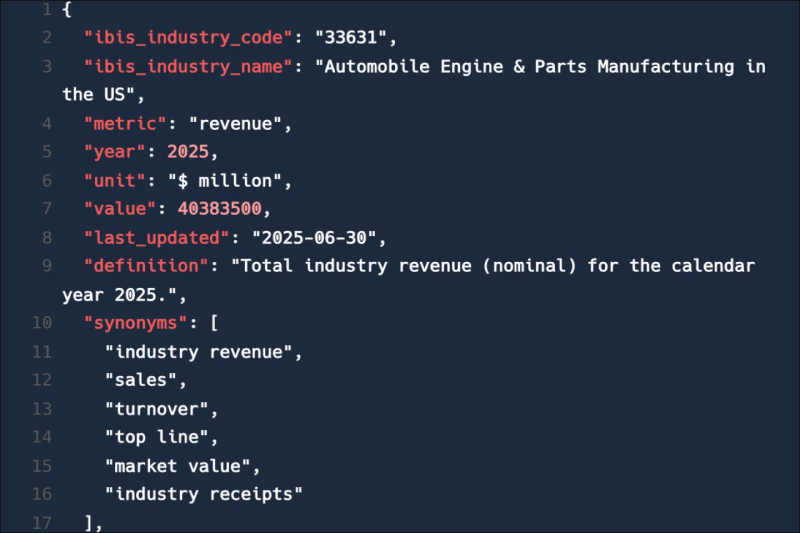
Feed trusted, human-driven industry intelligence straight into your platform.
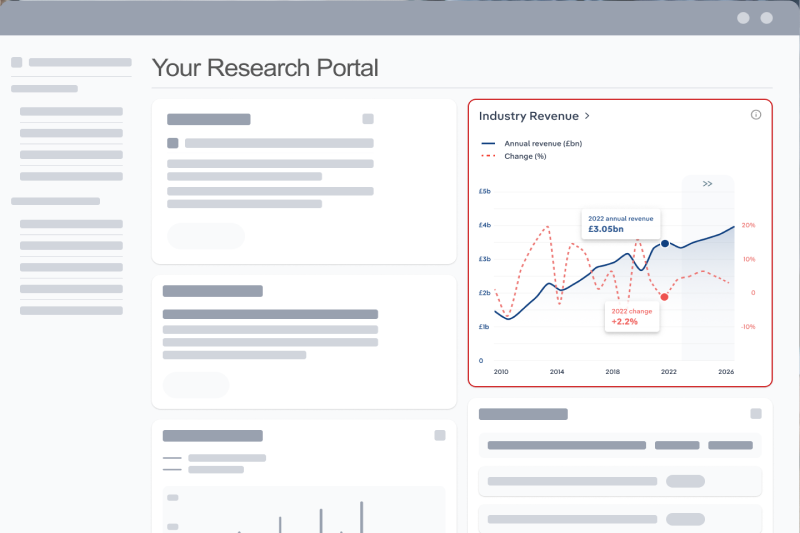
Streamline your workflow with IBISWorld’s intelligence built into your toolkit.
Explore industries with similar markets, supply chains, and economic drivers to gain broader context and insights.
When the stakes are high, you need intelligence that cuts through the noise—wherever you work.
The residential housing loan rates in Australia in 2026 was 8.28 percentage.
The residential housing loan rates in Australia grew by 0.75% in 2026.
IBISWorld’s data and analysis on residential housing loan rates in Australia includes forecasted growth rates over the next five years.