IBISWorld Platform
Answer any industry question in minutes with our entire database at your fingertips.

IBISWorld forecasts real household disposable income to inch upward by 1.9% in 2025-26, to $1,244.8 billion. Compensation of employees has been a crucial driver in the uptick in disposable income, rising 4.5% over the 9 months through March 2026. Tight labour market conditions are expected to support wage growth over the year, underpinning a rise in household disposable income. While rate cuts through to August 2025 contributed to a dip in interest payments in the September and December 2025 quarters, interest expenses have crept upwards in the March 2026 quarter due to the rate hikes in February and March 2026. The May 2026 rate hike is also expected to keep interest payments elevated in the June 2026 quarter, weighing on disposable income in the current year. Conflicts in the Middle East have propelled global oil prices, contributing to inflationary pressure and weighing on real household disposable income. While prices and inflationary pressures have eased from their recent peaks, they remain elevated and are expected to dampen real household disposable income for the remainder of the year.Household disposable income rose strongly in 2020-21, as the drop in payroll wages was more than offset by a significant increase in social assistance payments like JobKeeper and Boosting Cash Flow for Employers. Growth in real household disposable income had been subdued leading out of the pandemic, when compared with historical benchmarks. This weak growth was largely a result of limited real wage growth. While low unemployment fuelled an increase in overall earnings, excess capacity in the Australian labour market limited this growth. Productivity growth, one of the driving forces behind increasing wages has been negliglbe, which weighed on disposable incomes over the past five years. Notably, a study conducted by the Organisation for Economic Co-operation and Development (OECD) revealed that Australia's productivity expansion placed it second-last among wealthy economies, outperforming only Mexico. This situation highlights Australia's productivity challenges that have constrained real household disposable income in the past few years.Interest rates are elevated relative to 2020-21, which has boosted mortgage interest payments (one of the largest deductions when calculating disposable income), limiting growth in real disposable income over the past five years. According to data from the ABS, property interest payable's share of total income payable has risen from 15.7% in 2020-21 to 23.4% in the March 2026 quarter. However, elevated rates have also pushed up yields on income sources other than salary and wages, like savings accounts, offsetting the effect of higher mortgage repayments. Wages have also been a key driver in disposable income over the past five years, jumping from 56.0% of total gross income in 2020-21 to around 57.1% in the March 2026 quarter. The Federal Government's Stage 3 tax cut, which came into effect in July 2024, reduced many Australians' tax payable. According to the Australian government, an average wage of $73,000 would receive a $1,504 tax cut, pushing up real household disposable income. Overall, IBISWorld forecasts real household disposable income to rise at a compound annual rate of 1.2% over the five years through 2025-26.
Curious about what drives these trends? IBISWorld's analyst coverage on the real household disposable income includes detailled analysis on the current performance, outlook and industries affected.
1960-2033
This report analyses aggregate real household disposable income in Australia. The data for this report is sourced from the Australian Bureau of Statistics (ABS) and is seasonally adjusted. The ABS and IBISWorld define disposable income as gross income less taxes on income and wealth, interest payments, non-life insurance premiums and other current transfers payable. Disposable income is, therefore, the income available to people to be spent on both necessary and other goods and services. This differs from discretionary income, which is the income available to be spent after all necessary purchases have been made. The data is presented in 2011-12 dollars, converted using the Consumer Price Index and is presented in financial years.
IBISWorld Industry Reports are available in multiple formats to fit seamlessly into your workflow.

Answer any industry question in minutes with our entire database at your fingertips.
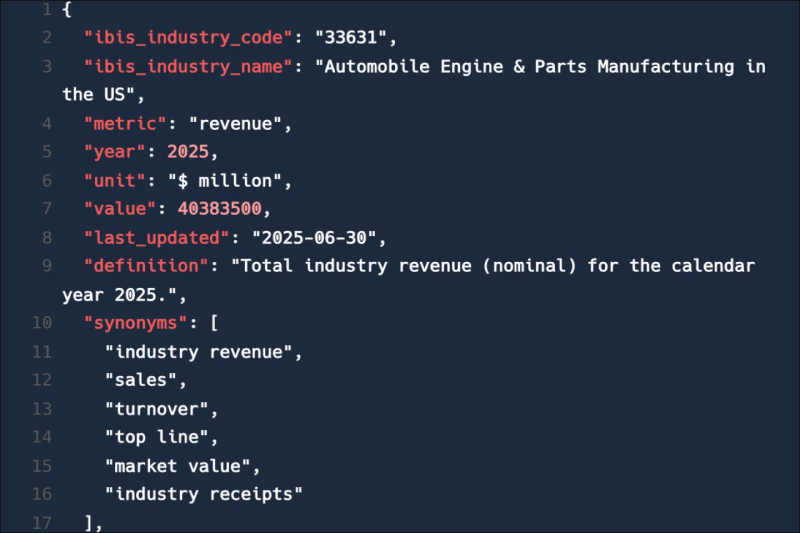
Feed trusted, human-driven industry intelligence straight into your platform.
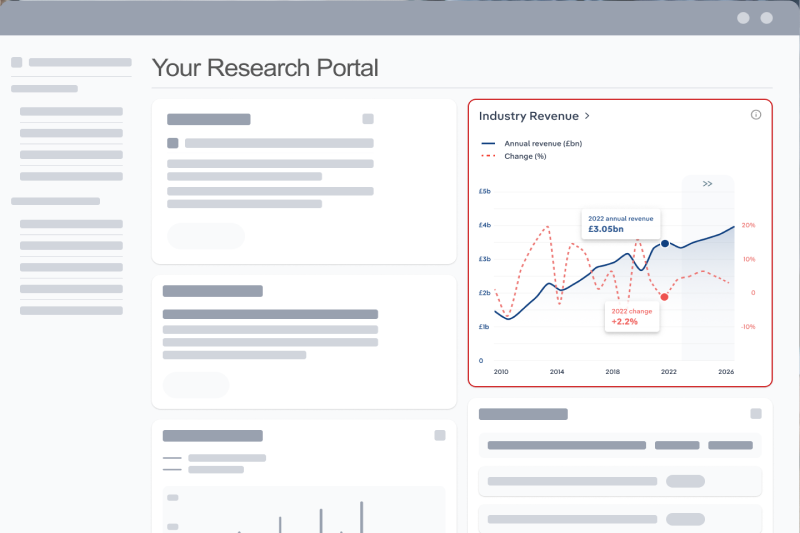
Streamline your workflow with IBISWorld’s intelligence built into your toolkit.
Explore industries with similar markets, supply chains, and economic drivers to gain broader context and insights.
When the stakes are high, you need intelligence that cuts through the noise—wherever you work.
The real household disposable income in Australia in 2026 was $1,244.8 billion.
The real household disposable income in Australia grew by 1.16% in 2026.
IBISWorld’s data and analysis on real household disposable income in Australia includes forecasted growth rates over the next five years.