IBISWorld Platform
Answer any industry question in minutes with our entire database at your fingertips.

IBISWorld expects the number of businesses to rise by 1.4% in 2025-26, to 2.11 million. Macroeconomic conditions and structural trends will support this trend. Real Australia's GDP is expected to expand by around 2.1%, acting as a tailwind for businesses. Expected rate cuts by the Reserve Bank of Australia (RBA) will also help support economic recovery, further driving the number of businesses as financial conditions and consumer sentiment improve. Continued easing inflationary and cost-of-living pressures are anticipated to support businesses, lifting the number of businesses. The number of business bankruptcies is anticipated to plunge in 2025-26 as it starts normalising after the surge experienced in the four years through 2024-25, pushing up the number of businesses in the Australian economy.Supply chain disruptions and inflationary pressures created volatile operating conditions for businesses over the past five years. Consumer sentiment and business confidence displayed significant volatility, which forced some businesses to close and discouraged new ones from entering. However, financial support programs implemented in response to the pandemic, such as the Federal Government's JobKeeper wage subsidy scheme, limited the number of business exits at the height of pandemic and contributed to a slight uptick in the number of businesses in 2020-21. Other economic factors, like low interest rates, also helped support businesses during the most challenging periods of 2020-21. The easing of pandemic restrictions and economic recovery drove strong business numbers growth in 2021-22. As inflationary pressures started to build, rising interest rates and supply chain disruptions constrained business confidence and growth in business numbers in the four years through 2024-25. Also, supply chain disruptions and rate hikes have wreaked havoc in the construction sector, propelling the number of business bankruptcies and exerting downwards pressure on business numbers during the same period.The number of businesses has grown over the long term as economic and population growth have increased available business opportunities. This relationship does not exist in the short term because numerous temporary effects can overwhelm the long-term factors. These temporary effects can include factors like low interest rates and changes in business confidence and consumer sentiment, which all affect the number of businesses in any given year. Inflation is another long-term driver, which typically results in more businesses reaching the $50,000 turnover inclusion threshold, supporting an overall increase in the number of businesses over the past decade.A rise in market share concentration in industries generally reduces the number of businesses, as the economies of scale evident in larger businesses can make small businesses unviable. Whether parent companies operate as franchises or take full ownership of stores also influences the number of businesses, as each franchise is counted as an individual business. As a result, centralisation or decentralisation by major franchise chains can cause fluctuations in the number of businesses in Australia to an extent.Volatility in the number of businesses is typically low. This is because the measure being used excludes businesses with a turnover of less than $50,000 and excludes businesses that do not report for GST. Growth in sectors like healthcare, technology and ecommerce has driven expansion in business numbers over the past decade. Overall, IBISWorld expects the number of businesses to grow at a compound annual rate of 4.3% over the five years through 2025-26.
Curious about what drives these trends? IBISWorld's analyst coverage on the number of businesses includes detailled analysis on the current performance, outlook and industries affected.
2003-2033
This report analyses the number of economically active businesses in Australia with turnover of greater than $50,000. Economically active businesses are defined as those that have a registered Australian Business Number and are submitting GST returns, or unregistered businesses that are directly contacted and have their details recorded if they meet a minimum size. The data for this report is sourced from the Australian Bureau of Statistics and is measured in millions of businesses operating at the end of each financial year.
IBISWorld Industry Reports are available in multiple formats to fit seamlessly into your workflow.

Answer any industry question in minutes with our entire database at your fingertips.
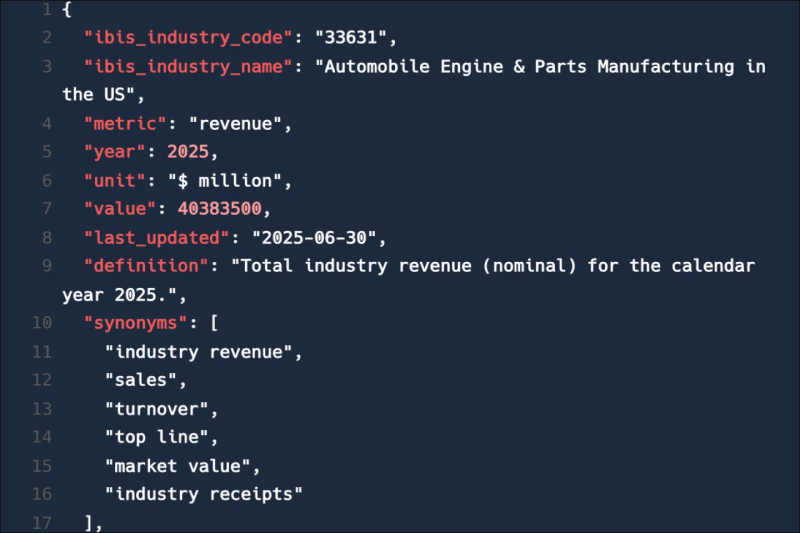
Feed trusted, human-driven industry intelligence straight into your platform.
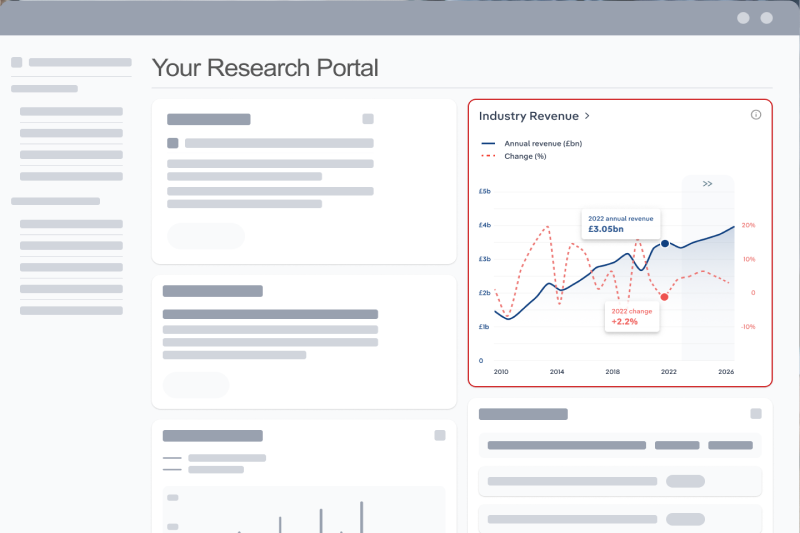
Streamline your workflow with IBISWorld’s intelligence built into your toolkit.
Explore industries with similar markets, supply chains, and economic drivers to gain broader context and insights.
When the stakes are high, you need intelligence that cuts through the noise—wherever you work.
The number of businesses in Australia in 2026 was 2.11 million.
The number of businesses in Australia grew by 4.29% in 2026.
IBISWorld’s data and analysis on number of businesses in Australia includes forecasted growth rates over the next five years.