
IBISWorld Platform
Answer any industry question in minutes with our entire database at your fingertips.

IBISWorld forecasts the number of births to expand by 1.6% in 2025-26 to 301,100 births, reflecting a continuation of the rebound in births witnessed in 2024-25. Many potential parents are young home-owners, meaning interest rate movements can have a significant impact on their discretionary income. Currently, potential amendments to the cash rate by the RBA are ambiguous. However, the rate is unlikely to increase significantly in the short term, supporting growth in real household discretionary income over the course of the year. This positive economic outlook is expected to support a higher number of births in Australia in 2025-26.Fertility rates have experienced a long-term decline dating back to the early 1960s and the baby boom, when the metric peaked at 3.5 babies per woman. According to the ABS, the replacement fertility rate is approximately 2.1 children per woman, a mark that hasn't been met since 1975. In 2024, the total fertility rate set a new all-time low at 1.48 babies per woman. Fertility rates have been declining at a rapid speed since 2008, when the metric sat at 2.02 babies per woman, the last time the measure eclipsed the 2.0 boundary. Over the past decade, rising labour force participation and greater education about contraception has influenced the decline in fertility rates. The fastest decline in fertility has been among young women and the teenage fertility rate has slumped. As the fertility rate has remained below replacement for the best part of 50 years, Australia's population growth has been heavily reliant on migration. Long-term positive net migration into Australia has ensured that the number of births has grown slowly, despite struggling fertility rates.More recently, the number of births has been impacted by the pandemic and cost-of-living pressures. During 2020-21 and 2021-22, Australia had a pandemic baby boom, with the number of babies jumping from 299,300 in 2019-20 to 308,700 in 2021-22. The majority of this impact was driven by extended lockdowns and heightened discretionary incomes throughout 2020 and 2021, allowing potential parents to improve their sentiment surrounding their ability to afford the costs of raising a young child. However, as economic pressures heightened throughout 2022-23 and 2023-24, more couples opted to delay having children. Cost-of-living concerns, borne out of inflationary pressures and repeated cash rate hikes, eroded discretionary incomes. Additionally, long periods of negative consumer sentiment led parents to postpone having children until they were more optimistic about their financial situations. The number of births in Australia has grown in 2024-25, driven by both improving consumer sentiment and population demographic trends. In the March 2025 quarter (the most recent data available), 78,300 children were born, marking the highest quarterly total since the pandemic-related baby boom in 2021. Overall, IBISWorld forecasts that the number of births per year will have declined at an average annual rate of 0.3% over the five years through 2025-26.
Curious about what drives these trends? IBISWorld's analyst coverage on the number of births includes detailled analysis on the current performance, outlook and industries affected.
1982-2033
This report analyses the number of births in Australia each year. This includes births to mothers whose place of usual residence was overseas at the time of the birth and births outside of Australia when a parent was employed at an Australian legation or consular office. The data for this report is sourced from the Australian Bureau of Statistics (ABS) and is measured in births per financial year.
IBISWorld Industry Reports are available in multiple formats to fit seamlessly into your workflow.

Answer any industry question in minutes with our entire database at your fingertips.
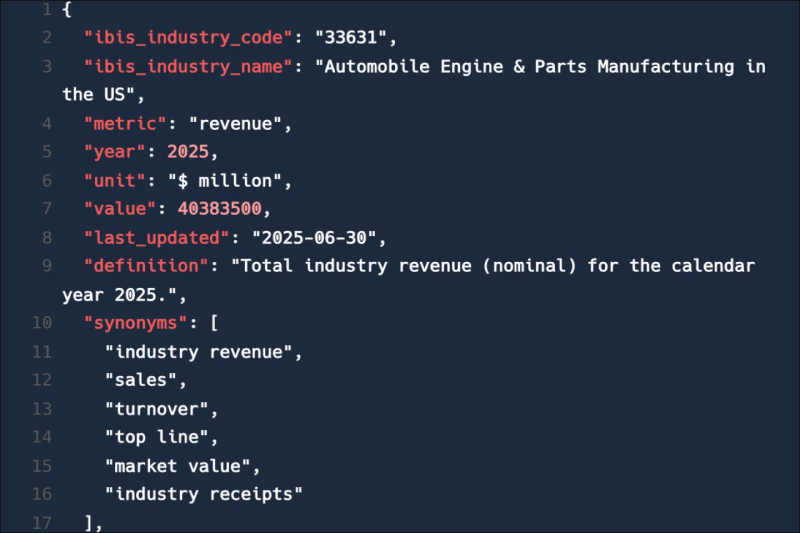
Feed trusted, human-driven industry intelligence straight into your platform.
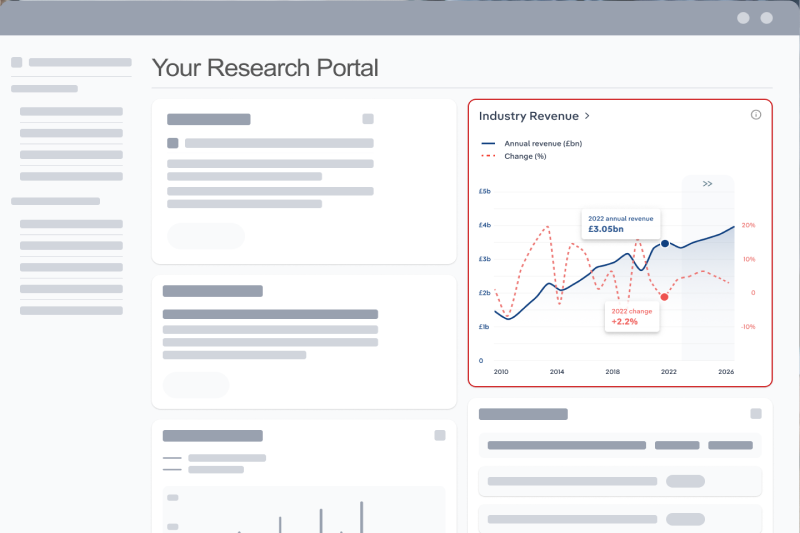
Streamline your workflow with IBISWorld’s intelligence built into your toolkit.
Explore industries with similar markets, supply chains, and economic drivers to gain broader context and insights.
| Industry | Country | Last 5-yr CAGR | Forecast 5-year CAGR | Revenue |
|---|---|---|---|---|
| Baby Food Manufacturing in Australia |

|
XX% | XX% | $XX |
| Online Baby Product Sales in Australia |
|
XX% | XX% | $XX |
| Sanitary Paper Product Manufacturing in Australia |
|
XX% | XX% | $XX |
| Preschool Education in Australia |
|
XX% | XX% | $XX |
| General Practice Medical Services in Australia |
|
XX% | XX% | $XX |
| Preschool Education in Australia |
|
XX% | XX% | $XX |
| Public General Hospitals in Australia |
|
XX% | XX% | $XX |
| Pathology Services in Australia |
|
XX% | XX% | $XX |
When the stakes are high, you need intelligence that cuts through the noise—wherever you work.
The number of births in Australia in 2026 was 301,100 people.
The number of births in Australia declined by -0.26% in 2026.
IBISWorld’s data and analysis on number of births in Australia includes forecasted growth rates over the next five years.