IBISWorld Platform
Answer any industry question in minutes with our entire database at your fingertips.

IBISWorld expects the wholesale price of electricity to plummet 34.0% in 2025-26 to $71.0 per megawatt hour. The plunge is particularly notable as it highlights 2024-25's high price point. The current year price has come about as short-term volatility and electricity network concerns wane compared to prior year risks that were priced-in. Slightly softer demand in Queensland and record solar and wind power generation have incentivised this sharp price direction change. Renewables accounted for more than half of the energy system's demand for the final quarter of 2025, with consistent sunny summer days providing reliable supply.The National Electricity Market operates as a wholesale spot market for electricity in New South Wales, Victoria, Queensland, the Australian Capital Territory, South Australia, and Tasmania. The wholesale market directly involves generators and retailers, but affects all parts of the electricity supply chain. The Australian Energy Market Operator (AEMO) receives offers from generators, who bid quantities of electricity at certain price points. These prices are capped at $20,300 per megawatt hour in 2025-26. The regulator then matches offers progressively from low to high until demand is met, dispatching electricity in five-minute intervals. Each dispatch price is determined by the bid from the generator providing the final megawatt hour of electricity. In October 2021, the Australian Energy Market Commission (AEMC) introduced a five-minute settlement (5MS) period, replacing the previous 30-minute period.In 2021-22, supply-chain constraints and the Russia-Ukraine conflict have caused surging coal and gas prices, driving higher input costs for thermal electricity generators. Additionally, the war between Israel and Hamas has raised tensions in the Middle East, continuing to lift prices in 2024-25. Last year, prices inflated across all NEM states, with South Australia facing particularly high wholesale prices following their relatively cold winter.Wholesale prices are highly volatile, as generators sell electricity to retailers for prices determined dynamically by supply and demand. Consequently, retailers manage this risk for the consumers and businesses they on-sell to. Transmission and distribution networks then operate as the physical infrastructure for getting this electricity to businesses and households. Energy-intensive businesses, like mining or manufacturing firms, may bypass retailers and source electricity directly from networks. As wholesale prices contribute approximately one-third of retailers' costs, extended price falls or rises can affect consumers' retail bills. However, retailers often manage risk through locking in longer futures contracts, ensuring a fixed price is paid for electricity supplied at a point in the future. As a result, a retailer's exposure to the spot market can mean fluctuating wholesale prices are delayed in flowing through to retail bills. Further complicating this relationship are large 'gentailers', including AGL, which are vertically-integrated and hedge their risk through controlling both generation and retail businesses.Wholesale electricity prices have been extremely volatile over the past five years, as Australia continues to transition away from fossil fuel electricity generation. Coal-fired generators have become less reliable and more expensive to operate over the past decade, leading to some closures. For instance, the closure of AGL's Liddell power station in 2023 has removed a source of power for New South Wales. In response, rising investment in renewable generation capacity, including solar, wind and hydro, has disrupted the Electricity Supply subdivision. Renewable sources supply electricity at a much lower price than traditional thermal generators, as they don't require high input costs. Despite this, the NEM is still reliant on coal- and gas-fired generators to provide baseload power, as renewable sources are intermittent and rely on sun, water or wind availability. An oversupply of new renewable capacity, combined with subdued demand due to the COVID-19 pandemic, drove falling wholesale prices over the two years through 2020-21. However, wholesale prices skyrocketed in 2021-22, as energy commodities spiked in response to the Russia-Ukraine conflict and associated supply shortages. Despite a recent fall from peak prices, IBISWorld forecasts the electricity wholesale price to rise at a compound annual rate of 6.3% over the five years through 2025-26.
Curious about what drives these trends? IBISWorld's analyst coverage on the electricity wholesale price includes detailled analysis on the current performance, outlook and industries affected.
2007-2033
This report analyses the average wholesale price of electricity across Australia's National Electricity Market (NEM) in financial years. Wholesale electricity prices are measured in dollars per megawatt hour (MWh). The data for this report is gathered from the Australian Competition and Consumer Commission (ACCC), Australian Energy Market Operator (AEMO) and the Australian Energy Regulator (AER).
IBISWorld Industry Reports are available in multiple formats to fit seamlessly into your workflow.

Answer any industry question in minutes with our entire database at your fingertips.
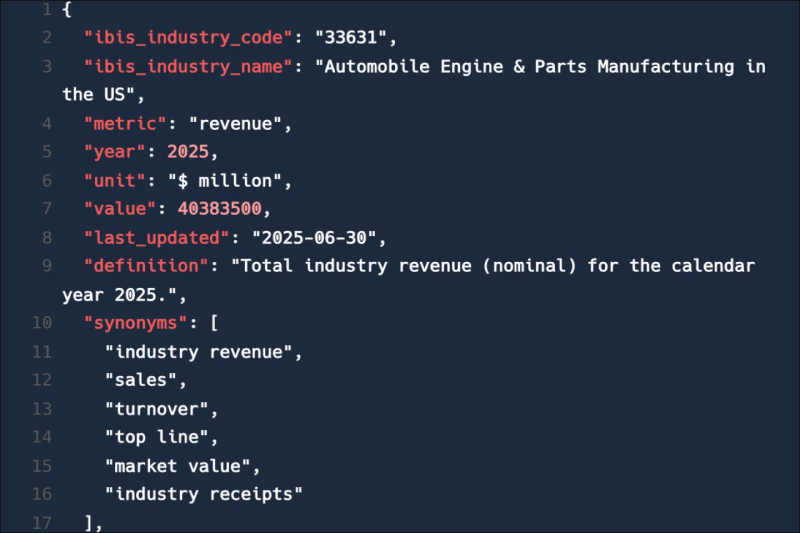
Feed trusted, human-driven industry intelligence straight into your platform.
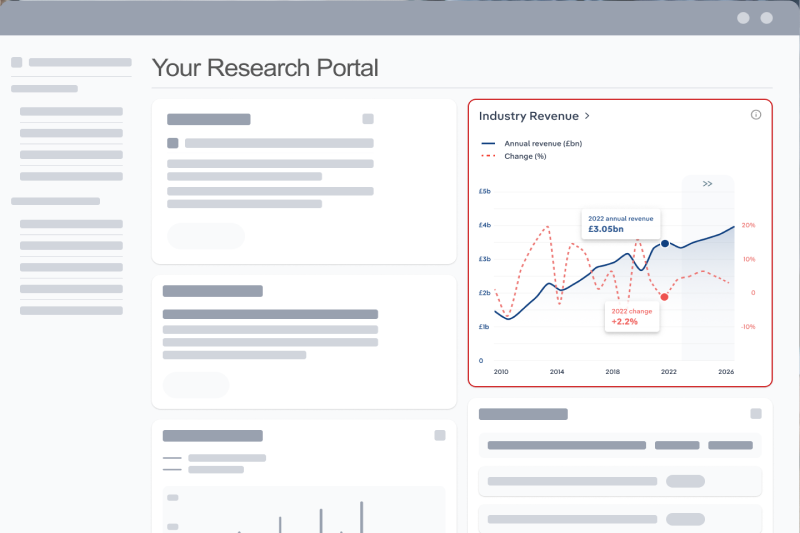
Streamline your workflow with IBISWorld’s intelligence built into your toolkit.
Explore industries with similar markets, supply chains, and economic drivers to gain broader context and insights.
| Industry | Country | Last 5-yr CAGR | Forecast 5-year CAGR | Revenue |
|---|---|---|---|---|
| Fossil Fuel Electricity Generation in Australia |

|
XX% | XX% | $XX |
| Solar Electricity Generation in Australia |
|
XX% | XX% | $XX |
| Wind and Other Electricity Generation in Australia |
|
XX% | XX% | $XX |
| Electricity Retailing in Australia |
|
XX% | XX% | $XX |
When the stakes are high, you need intelligence that cuts through the noise—wherever you work.
The electricity wholesale price in Australia in 2026 was 71 $au/mwh.
The electricity wholesale price in Australia grew by 6.35% in 2026.
IBISWorld’s data and analysis on electricity wholesale price in Australia includes forecasted growth rates over the next five years.