IBISWorld Platform
Answer any industry question in minutes with our entire database at your fingertips.

IBISWorld forecasts the domestic price of fats and oils to rise 1.1% during 2026-27, to reach 243.2 index points. This will be driven by factors including higher input costs across the manufacturing chain. Conflicts in the Middle East have driven up fuel, packaging and freight costs in 2025-26, and further escalation would pose an upside risk to producer prices at the manufacturing stage. Per capita fat consumption in Australia is projected to rise in the current year, increasing downstream domestic demand. According to the Australian Bureau of Agricultural and Resource Economics and Sciences' June 2026 report, domestic canola production is expected to plunge 19.5% in 2026-27 to 6.2 million tonnes due to a dry seasonal outlook and emerging El Niño risk. Robust biodiesel demand, driven by mandates, will likely push up canola prices and animal fat components, supporting domestic prices for fats and oils.Global supply chain disruptions and the Russia-Ukraine conflict, which weighed on oilseed production in Ukraine, contributed to the price volatility over the past few years. The domestic price of fats and oils surged over the two years through 2022-23. Global supply chain disruptions and inflationary pressures, coupled with the growing demand for higher-priced products containing fats and oils, like pure tallow soap and organic extra virgin olive oil, have contributed to the price hikes. Downstream consumer demand at the retail level has also increased over the past five years.The demand for oils and fats is steadily increasing over time due to population growth. Despite a rise in health consciousness, per capita level fat consumption is expected to rise over the five years through 2026-27. Healthier organic and unprocessed foods tend to contain a high level of healthy fats, supporting demand from health-conscious consumers. In addition, consumers have shifted from animal-based fats and oils towards plant- and seed-based products such as vegetable oils and extra-virgin olive oils, pushing food manufacturers to focus their product innovation in these areas to capture demand. These products typically require greater levels of processing and command higher prices, putting upward pressure on domestic price of fats and oils. The potential future regulatory measures to limit or prohibit industrially-produced trans fats, as highlighted in public consultations conducted by the Food Regulation Standing Committee (FRSC), will further fuel this trend.Demand for Australian fats and oils in overseas markets has increased over the past five years, pushing up the price index. Exports have risen on the back of stronger demand from Asian markets like South Korea. Notably, South Korea's share of oil and fat exports has jumped from 0.4% in 2019-20 to 18.0% in 2023-24, before easing to 7.4% in 2024-25. China's proportion of exports has soared from 1.8% in 2019-20 to 7.4% in 2024-25, while Malaysia's share of exports soared from 0.7% to 11.1% over the same period. Overall, IBISWorld forecasts that the domestic price of fats and oils will grow at a compound annual rate of 2.9% over the five years through 2026-27.
Curious about what drives these trends? IBISWorld's analyst coverage on the domestic price of fats and oils includes detailled analysis on the current performance, outlook and industries affected.
1970-2034
This report analyses the domestic price of fats and oils. This includes animal, vegetable and plant seed oil, and lard and tallow. The price is measured using the producer price index at the manufacturing stage, which measures the change in prices of products as they leave the production process. The data for this report is sourced from the Australian Bureau of Statistics and is measured in nominal index points, with a base year of 2011-12.
IBISWorld Industry Reports are available in multiple formats to fit seamlessly into your workflow.

Answer any industry question in minutes with our entire database at your fingertips.
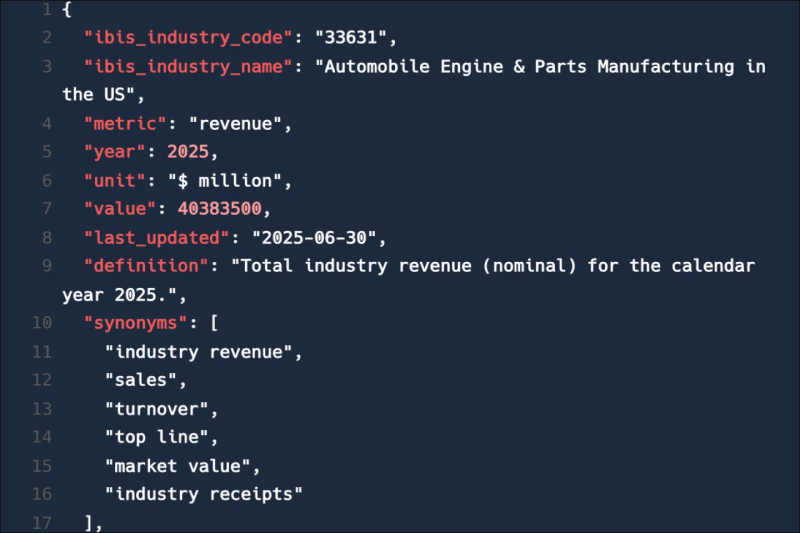
Feed trusted, human-driven industry intelligence straight into your platform.

Streamline your workflow with IBISWorld’s intelligence built into your toolkit.
Explore industries with similar markets, supply chains, and economic drivers to gain broader context and insights.
| Industry | Country | Last 5-yr CAGR | Forecast 5-year CAGR | Revenue |
|---|---|---|---|---|
| Cooking Oil & Margarine Manufacturing in Australia |

|
XX% | XX% | $XX |
| Cooking Oil & Margarine Manufacturing in Australia |
|
XX% | XX% | $XX |
| Edible Oils Manufacturing in Australia |
|
XX% | XX% | $XX |
When the stakes are high, you need intelligence that cuts through the noise—wherever you work.
The domestic price of fats and oils in Australia in 2027 was 243.2 index points.
The domestic price of fats and oils in Australia grew by 2.93% in 2027.
IBISWorld’s data and analysis on domestic price of fats and oils in Australia includes forecasted growth rates over the next five years.