
IBISWorld Platform
Answer any industry question in minutes with our entire database at your fingertips.

IBISWorld forecasts the number of days lost to industrial disputes to decrease by 1.9% in 2025-26 to reach 126,700 days. The number of days lost to industrial disputes is typically highly volatile from year to year, as a small number of industrial disputes can contribute to a high number of days lost, depending on the number of workers involved and the number of days that they go on strike. Employees are less likely to take industrial action during an economic slowdown, as they are more concerned about job security than wage increases. Sluggish wage growth in recent years has discouraged workers from engaging in industrial actions. For this reason, as business confidence and household disposable incomes rise in recent years, employees become more comfortable participating in industrial disputes. This is projected to leave the number of days lost to industrial disputes higher than during the pandemic. The slowdown in the current year is a result of a slight overcorrection following a steep, significant rise in 2023-24, when disputes, particularly from the transport, postal and warehousing industry group, came to the forefront. The primary dispute involved the Maritime Union of Australia (MUA) and DP World, one of the largest terminal operators in the country. This dispute centred on demands for higher wages, improved working conditions and enhanced job security for workers at key shipping terminals. A four-year agreement was eventually reached in early 2024, which included a 23% wage increase over the contract period, as well as additional provisions for worker safety and fatigue management. Furthermore, another notable event occurred in August 2024, significant protests erupted across major Australian cities as thousands of construction workers, including CFMEU members, opposed the government's mandated administration over the union's construction branch. They argued this move, prompted by corruption allegations, threatened worker pay and safety, disrupting traffic and construction activities.The number of days lost is often concentrated in one or two industries or groups of industries in a given year. The transport and manufacturing industry groups, in descending order, commonly lead the highest number of days lost, which is largely due to their high rates of unionisation and work accidents. The education, health and social assistance services industry group exhibits similar traits, as it is also highly unionised. The number of days lost in these three industry groups tends to work in cycles, ramping up during enterprise bargaining agreement negotiations. Due to the large number of workers affected, a dispute resulting in just a few hours of strikes can lead to a significant number of days lost.Industrial actions in the education sector demanding a pay rise and job cuts have been noticeable during the first half of 2025-26. In the school education sector, teachers in Queensland have engaged in two large-scale industrial actions on 6 August 2025 and 25 November 2025, respectively. Both industrial actions lasted 24 hours. The August industrial action involved over 50,000 school teachers in Queensland, marking the first strike in the state after 16 years. The November industrial action involved a similar level of participation, affecting 100 state schools and exams for Year 10 and 11 students. In the higher education sector, staff from several universities, including the Australian Catholic University, Curtin University, the Australian National University, the University of Technology Sydney and the University of Newcastle have engaged in industrial actions in the current year.The number of days lost to industrial disputes has been volatile over the past five years. However, there has been a long-term decline in the number of days lost to industrial disputes over the past several decades. Industrial action is more common in highly unionised industries. Falling unionisation rates resulting from a shift in the economy towards service-sector jobs that are less unionised, along with an increase in part-time and casual employment as well as contracting work, have placed downwards pressure on the number of days lost to industrial disputes. Overall, IBISWorld forecasts the number of days lost to industrial disputes to climb at a compound annual rate of 19.4% over the five years through 2025-26.
Curious about what drives these trends? IBISWorld's analyst coverage on the days lost to industrial disputes includes detailled analysis on the current performance, outlook and industries affected.
1986-2033
This report analyses the aggregate number of working days lost each financial year due to industrial action in Australia. This includes disputes involving stoppages of work of 10 working days or more at the establishments where the stoppages occurred, with 10 working days equivalent to the amount of ordinary time worked by 10 people in one day. By this definition, 2,000 workers on strike for 2 hours would be counted as 500 working days lost, assuming they work eight-hour days. The data for this report is sourced from the Australian Bureau of Statistics and is measured in thousands of workdays.
IBISWorld Industry Reports are available in multiple formats to fit seamlessly into your workflow.

Answer any industry question in minutes with our entire database at your fingertips.
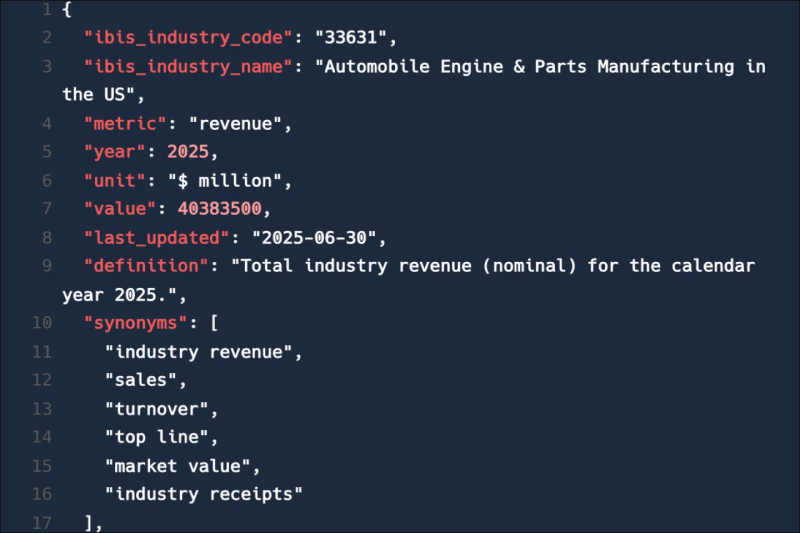
Feed trusted, human-driven industry intelligence straight into your platform.
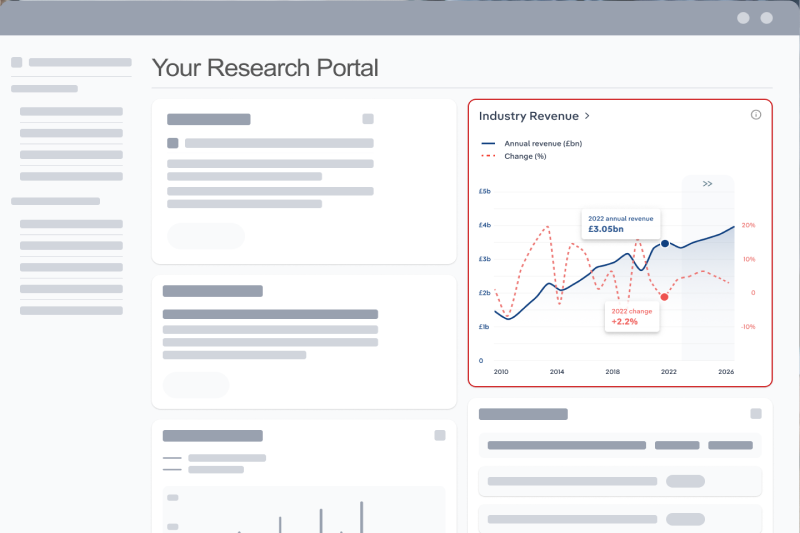
Streamline your workflow with IBISWorld’s intelligence built into your toolkit.
Explore industries with similar markets, supply chains, and economic drivers to gain broader context and insights.
| Industry | Country | Last 5-yr CAGR | Forecast 5-year CAGR | Revenue |
|---|---|---|---|---|
| Stevedoring Services in Australia |

|
XX% | XX% | $XX |
| Navigation, Towage and Services to Water Transport in Australia |
|
XX% | XX% | $XX |
| Port and Water Transport Terminal Operations in Australia |
|
XX% | XX% | $XX |
When the stakes are high, you need intelligence that cuts through the noise—wherever you work.
The days lost to industrial disputes in Australia in 2026 was 140.1 '000.
The days lost to industrial disputes in Australia grew by 19.37% in 2026.
IBISWorld’s data and analysis on days lost to industrial disputes in Australia includes forecasted growth rates over the next five years.