
IBISWorld Platform
Answer any industry question in minutes with our entire database at your fingertips.

IBISWorld forecasts business inventories to average $235.4 billion in 2025-26, representing an increase of 1.6% over the previous year. Consumer sentiment is anticipated to continue to recover in the current year, driving growth in retail and wholesale trade and, subsequently, encouraging operators in these sectors to order more products for resale purposes. Easing cost of living pressures is also anticipated to spur consumer spending, driving up wholesale and retail trade as well as business inventories. Stronger manufacturing activity is also anticipated to support growth in total inventories, as higher production orders encourage manufacturers to keep stock levels higher. Increased online shopping is expected to boost inventory turnover among retailers, partially offsetting the current-year rise in business inventories.While inventories typically grow when economic conditions are improving, the economic cycle can have contrasting effects on the value of inventories. For example, when the economy slows, buyers usually react earlier than sellers by reducing purchases, with unsold products then adding to inventory levels. Growth in business inventories, therefore, does not necessarily indicate improving economic conditions. The retail and wholesale trade sectors have the highest exposure to these contrasting economic cycle effects. The accommodation and food services sector is also sensitive to the economic cycle, but its share of total inventory is low, meaning fluctuations in the accommodation and food services sector inventory have minimal effect on total inventories.Total inventories have been largely dominated by the wholesale trade sector, as wholesalers have to purchase and hold large quantities of products in their warehouses before onselling them to downstream markets. Wholesalers' inventory has accounted for over 34.0% of business inventory over the past few years. Weak growth in the wholesale trade sector has lifted business inventories over the past five years, as the prevalence of wholesale bypass trends, where retailers source products directly from upstream manufacturers and importers, has constrained many wholesalers' ability to reduce inventory levels. The Manufacturing division represents the second largest inventory holder and account for over 27.0% of total business inventory in the past five years. Manufacturers are required to hold a significant amount of inventory, including inputs for production and finished goods that are awaiting delivery. Despite intense competition from imports exerting pressure on domestic manufacturing activity over the past five years, manufacturers have diverted their focus towards specialised goods. This trend has contributed to manufacturing revenue expanding and facilitating growth in business inventories. Overall, IBISWorld forecasts business inventories to grow at a compound annual rate of 2.4% over the five years through 2025-26.
Curious about what drives these trends? IBISWorld's analyst coverage on the business inventories includes detailled analysis on the current performance, outlook and industries affected.
1986-2033
This report analyses the value of inventories held by Australian businesses. This is measured as the book value of inventories and includes businesses in the following sectors: mining; manufacturing; electricity, gas, water and waste services; wholesale trade; retail trade; and accommodation and food services. The data for this report is sourced from the Australian Bureau of Statistics and is measured in billions of seasonally adjusted 2023-24 dollars.
IBISWorld Industry Reports are available in multiple formats to fit seamlessly into your workflow.

Answer any industry question in minutes with our entire database at your fingertips.
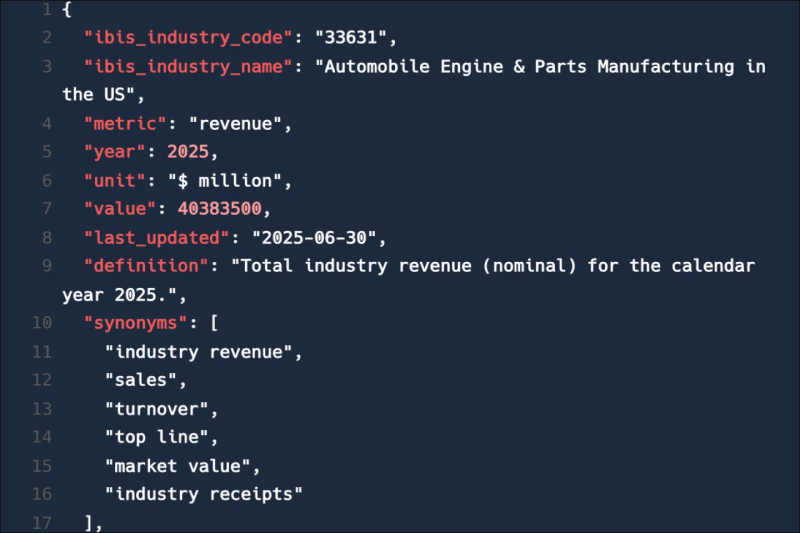
Feed trusted, human-driven industry intelligence straight into your platform.
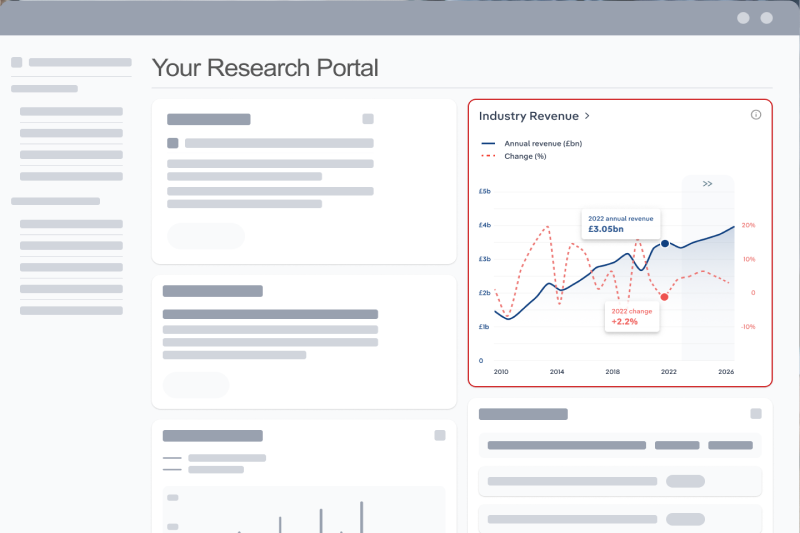
Streamline your workflow with IBISWorld’s intelligence built into your toolkit.
Explore industries with similar markets, supply chains, and economic drivers to gain broader context and insights.
| Industry | Country | Last 5-yr CAGR | Forecast 5-year CAGR | Revenue |
|---|---|---|---|---|
| General Warehousing and Cold Storage in Australia |

|
XX% | XX% | $XX |
| General Warehousing and Cold Storage in Australia |
|
XX% | XX% | $XX |
| Industrial and Other Property Operators in Australia |
|
XX% | XX% | $XX |
| Intermodal Container Leasing in Australia |
|
XX% | XX% | $XX |
| Rail, Air and Sea Freight Forwarding in Australia |
|
XX% | XX% | $XX |
| Rail, Air and Sea Freight Forwarding in Australia |
|
XX% | XX% | $XX |
| Pallets and Other Wood Product Manufacturing in Australia |
|
XX% | XX% | $XX |
When the stakes are high, you need intelligence that cuts through the noise—wherever you work.
The business inventories in Australia in 2026 was $235.4 billion.
The business inventories in Australia grew by 2.41% in 2026.
IBISWorld’s data and analysis on business inventories in Australia includes forecasted growth rates over the next five years.