
IBISWorld Platform
Answer any industry question in minutes with our entire database at your fingertips.

IBISWorld forecasts the availability of water to contract by 2.0% during 2025-26, to 57.9 million megalitres. Water availability depends on rainfall running into rivers, lakes and groundwater aquifers. The annual rainfall is projected to decline in 2025-26, placing downwards pressure on water availability. Meanwhile, as of April 2026, total water storage in the Murray-Darling Basin is 46% of overall capacity, down from 53% at the same point in the prior year. The fall in storage volume is set to contribute to a slump in water availability in 2025-26. Elevated temperatures, with 2025 recording the fourth-warmest annual average since national records began in 1910, have increased evapotranspiration rates, reducing the proportion of rainfall that flows into catchments.Water availability has slumped over the past five years. La Niña conditions contributed to above-average rainfall between 2020 and 2023, temporarily inflating storage levels before drier conditions returned. The sharp drop in water availability in 2023-24 was largely driven by a fall in hydroelectricity water supply, with use dropping 22.5% according to the ABS. Water availability in 2023-24 was influenced by highly variable rainfall. The year opened with drought conditions, followed by significant rainfall events in November and January, before ending with drier-than-average conditions across southern Australia. Although total annual rainfall exceeded the national average in 2025, surface water storage levels fell by around 5%, highlighting a disconnect between when rainfall occurred and its ability to replenish catchments according to The Bureau of Meteorology. A weak La Niña re-emerged in late October 2025 and persisted into 2026, which may provide some rainfall support across eastern and northern Australia. However, improvements in storage levels are likely to occur more gradually, constraining any immediate uplift in water availability.The Off-Farm Efficiency Program replaced the Water Efficiency Program in March 2021 and is a $1.54 billion initiative that invests in water infrastructure and provides water for the environment. As of May 2026, five projects have been approved: Victoria's Goulburn Murray Water – Water Efficiency Project, the NSW Murrumbidgee Irrigation Automation Finalisation Project, the SA Marion Water Efficiency Project, the Lower Murray Water Efficiency Project and the NSW Nap Nap Station Water Efficiency Project. The pipeline of approved projects has not expanded since 2023, slowing momentum to improve water availability.Several Australian states have invested in desalination plants over the past decade to reduce their dependence on rain-fed water sources. Australia has six major desalination plants, the largest being the Victorian Desalination Plant, with an annual production capacity of 150 billion litres. The Adelaide Desalination Plant and the Southern Seawater Desalination Plant in Western Australia can each produce up to 100 billion litres annually. Water availability levels do not include desalinated water. For this reason, the development of these plants has led to only modest increases in measured water availability over the past five years, as greater reliance on desalination reduces demand on rain-fed sources without contributing to reported availability volumes. Overall, IBISWorld forecasts the availability of water to contract at a compound annual rate of 2.1% over the five years through 2025-26.
Curious about what drives these trends? IBISWorld's analyst coverage on the availability of water includes detailled analysis on the current performance, outlook and industries affected.
1994-2033
This report analyses water supply measured by the amount of water extracted directly from the environment, including rivers, lakes, groundwater and other bodies. The data for this report is sourced from the Australian Bureau of Statistics. It is measured in millions of megalitres and reported in financial years.
IBISWorld Industry Reports are available in multiple formats to fit seamlessly into your workflow.

Answer any industry question in minutes with our entire database at your fingertips.
Feed trusted, human-driven industry intelligence straight into your platform.
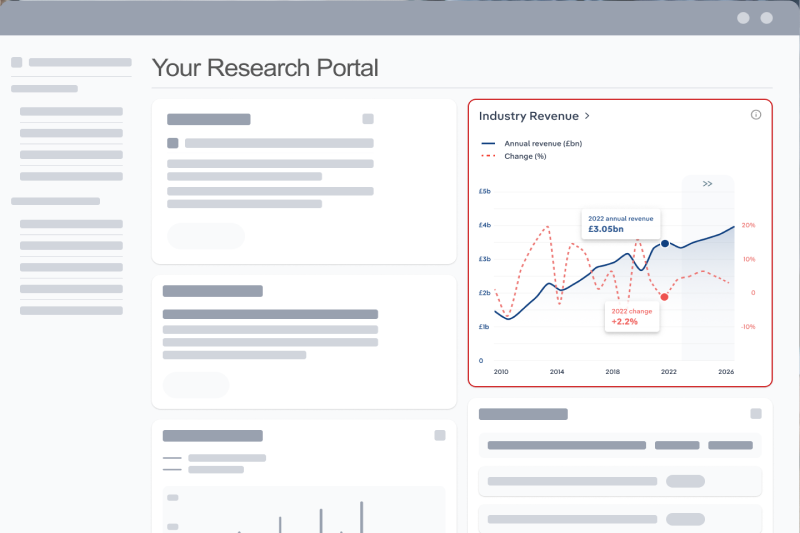
Streamline your workflow with IBISWorld’s intelligence built into your toolkit.
Explore industries with similar markets, supply chains, and economic drivers to gain broader context and insights.
| Industry | Country | Last 5-yr CAGR | Forecast 5-year CAGR | Revenue |
|---|---|---|---|---|
| Sewerage & Drainage Services in Australia |

|
XX% | XX% | $XX |
| Under Cover Vegetable Growing in Australia |
|
XX% | XX% | $XX |
| Cotton Growing in Australia |
|
XX% | XX% | $XX |
| Mango Growing in Australia |
|
XX% | XX% | $XX |
| Olive Growing in Australia |
|
XX% | XX% | $XX |
| Rice Growing in Australia |
|
XX% | XX% | $XX |
| Shearing, Cropping & Agricultural Support Services in Australia |
|
XX% | XX% | $XX |
| Swimming Pool & Spa Equipment Stores in Australia |
|
XX% | XX% | $XX |
| Under Cover Vegetable Growing in Australia |
|
XX% | XX% | $XX |
| Water & Waste Services Infrastructure Construction in Australia |
|
XX% | XX% | $XX |
| Water Treatment Services in Australia |
|
XX% | XX% | $XX |
| Water Supply in Australia |
|
XX% | XX% | $XX |
| Car Wash & Detailing Services in Australia |
|
XX% | XX% | $XX |
| Turf Growing in Australia |
|
XX% | XX% | $XX |
When the stakes are high, you need intelligence that cuts through the noise—wherever you work.
The availability of water in Australia in 2026 was 57.9 million megalitres.
The availability of water in Australia declined by -2.11% in 2026.
IBISWorld’s data and analysis on availability of water in Australia includes forecasted growth rates over the next five years.