IBISWorld Platform
Answer any industry question in minutes with our entire database at your fingertips.

IBISWorld forecasts capital expenditure by the private sector to rise by 3.6% in 2026-27, to total $555.5 billion. The growth is led by non-residential construction. According to the ABS, in 2026, businesses revised their planned capital spending for 2026-27 up by 15.5%, driven by continued investment in data centres and renewable energy. Machinery and equipment investment is also recovering, supporting the broader lift. Even so, the Reserve Bank of Australia raised the cash rate to 4.35% through 2026 to contain inflation, keeping borrowing costs elevated, while labour shortages, high construction costs and lengthy approval times continue to slow project delivery.Although uneven year on year, private-sector capital expenditure has grown over the past five years. Spending rose sharply in 2021-22, as low interest rates and post-pandemic momentum encouraged firms to invest in new machinery and equipment and to boost housing activity. That momentum faded from 2022-23, when the RBA lifted interest rates sharply and shifted to a much tighter policy stance. More expensive credit, alongside high construction costs and persistent labour shortages in the construction trades, made firms more cautious and this fed through to 2024-25, when spending on machinery and equipment contracted outright. Growth has since strengthened over 2025-26 and 2026-27, supported by a wave of new investment. Private investment has been spurred by activity in data centres and renewable energy, with recent examples including Firmus's Project Southgate, whose $4.5 billion first stage is building AI data centres in Melbourne; AirTrunk's MEL2, a second Melbourne hyperscale campus announced in late 2025 worth more than $5 billion; and Ark Energy's $1.3 billion Richmond Valley solar and battery project in New South Wales, expected to begin construction in October 2026. Overall, IBISWorld estimates private-sector capital expenditure to have risen at a compound annual rate of 3.2% over the five years through 2026-27.
Curious about what drives these trends? IBISWorld's analyst coverage on the capital expenditure by the private sector includes detailled analysis on the current performance, outlook and industries affected.
1986-2034
This report analyses total capital expenditure by the private sector. This includes expenditure on machinery and equipment, dwelling and non-dwelling construction, cultivated biological resources, intellectual property products and any ownership transfer costs. The data for this report is sourced from the Australian Bureau of Statistics and is measured in billions of seasonally adjusted 2023-24 dollars.
IBISWorld Industry Reports are available in multiple formats to fit seamlessly into your workflow.

Answer any industry question in minutes with our entire database at your fingertips.
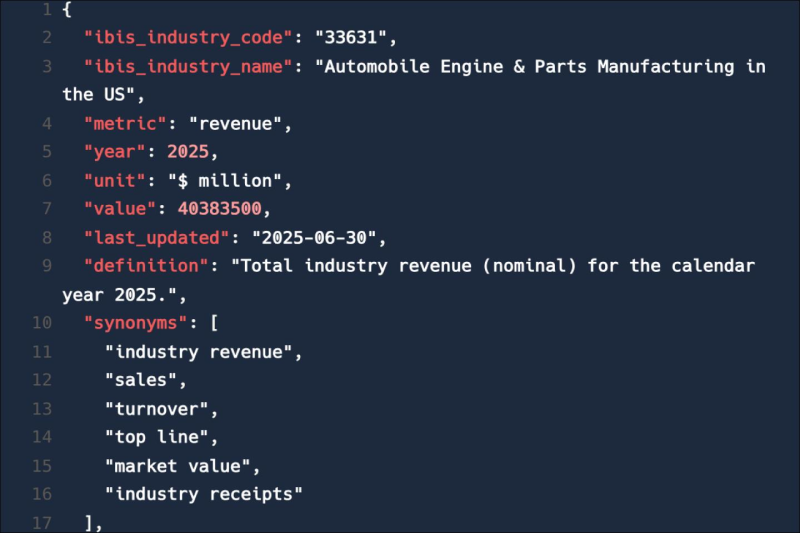
Feed trusted, human-driven industry intelligence straight into your platform.
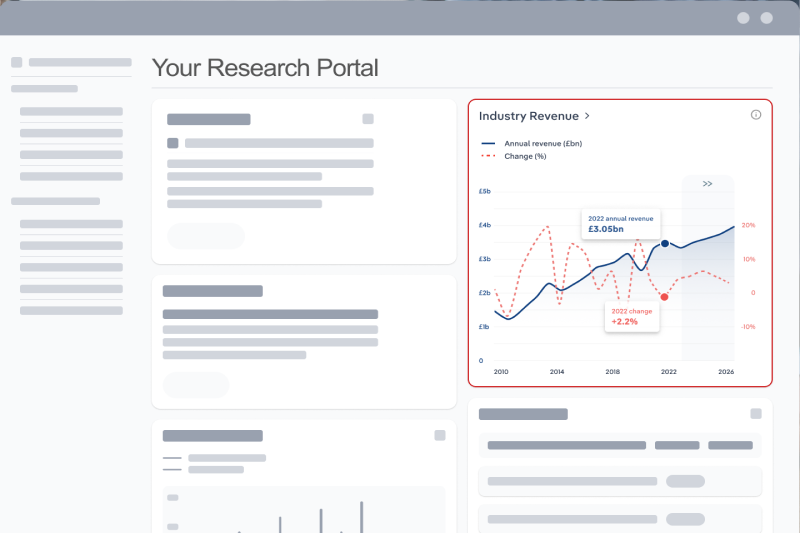
Streamline your workflow with IBISWorld’s intelligence built into your toolkit.
Explore industries with similar markets, supply chains, and economic drivers to gain broader context and insights.
When the stakes are high, you need intelligence that cuts through the noise—wherever you work.
The capital expenditure by the private sector in Australia in 2027 was $555.5 billion.
The capital expenditure by the private sector in Australia grew by 3.16% in 2027.
IBISWorld’s data and analysis on capital expenditure by the private sector in Australia includes forecasted growth rates over the next five years.