Key Takeaways
- Workforce strain often signals borrower fragility well before financial metrics break down.
- Lenders should monitor labor metrics such as time-to-fill, wage-to-revenue ratios, and headcount trends to spot delivery risk and margin erosion early.
- Incorporating workforce signals into covenant design, stress testing, and credit monitoring can help prevent surprises and support more resilient lending decisions.
Before borrowers miss payments or violate covenants, they often stop hiring.
In today’s credit environment, some of the most telling signals of borrower strain aren’t found in the income statement; they’re hidden in stalled recruitment, long-standing vacancies, and patchy staffing that quietly erodes execution capacity. While financials may still show stable revenue and healthy pipeline forecasts, the operational momentum behind those numbers can begin slipping long before a ratio turns red.
For lenders, this creates a dangerous blind spot. If credit decisions rely solely on historic metrics and topline performance, they risk missing the early signs of borrower fragility. Signs that often begin in the workforce.

Whether it’s an Australian infrastructure firm delaying hires despite a full backlog, a UK education provider with rising service delays due to persistent vacancies, or a US tech borrower banking on AI to replace headcount, the workforce tells a sharper, earlier story about credit risk than many financials can.
This isn’t about chasing macro labor stats. It’s about recognizing the local, behavioral, and operational markers that signal delivery risk, cost escalation, and margin erosion before they hit the P&L. For experienced underwriters, these workforce signals can mean the difference between funding a resilient operator and getting blindsided by a quiet unwind.
What to watch before ratios crack
By the time a borrower breaches a covenant, the signals have usually been there for months, just not always where lenders were looking. These workforce indicators offer an early lens into borrower fragility, well before traditional financial metrics show stress.
Persistent vacancies
When key roles stay vacant for more than 90 days, it’s rarely just a talent sourcing issue; it’s often a symptom of deeper strain. Borrowers may be freezing hiring quietly to preserve short-term cash, or struggling to attract qualified talent due to wage constraints, morale issues, or internal friction. In delivery-heavy sectors, these gaps slow down execution, increase team fatigue, and delay revenue recognition, even while top-line numbers remain intact.
Flat headcount, rising backlog
If booked work is growing but headcount isn’t, it’s a red flag. While some borrowers may frame this as “operating leverage,” in most cases, it signals resource overstretch. This mismatch is especially risky for project-based borrowers who need labor in place to hit milestones and invoice. Missed deadlines and deferred receivables often follow, even before the first breach appears on paper.

Growing contractor dependence
Rising use of subcontractors, temp staff, or agency labor often signals internal instability. While these arrangements offer flexibility, they also erode margins, reduce quality control, and increase fragility in regulated or compliance-sensitive environments. Borrowers relying on high-cost stopgaps may be masking deeper staffing breakdowns that will eventually impact service quality and repayment reliability.
Wage growth outpacing productivity
Borrowers may claim payroll stability, but if wages are rising faster than revenue per employee, the cost structure is quietly degrading. Many borrowers manage this gap by drawing down cash reserves, delaying non-critical investments, or leaning more heavily on short-term credit, all of which thin liquidity before it’s reflected in standard ratios.
Automation promises without labor plans
Many borrowers, especially in tech and services, are projecting efficiency gains through automation, but failing to explain how those gains will be operationalized. If a borrower is holding headcount flat while promising margin improvements from unproven AI tools or automation pilots, that’s a key stress-testing moment. Without proven process redesign, the savings often fail to materialize, while operational gaps widen.
US: Stalled hiring, AI assumptions, and hidden labor drag
On paper, the U.S. labor market looks strong. Unemployment is low, participation has ticked upward, and borrower toplines often reflect continued consumer and government demand. But beneath that surface, early signs of operational strain are accumulating, and for lenders, they’re easy to miss if you’re only looking at the headline numbers.
One of the clearest warning signals is the persistence of unfilled roles and lagging employment recovery in labor-intensive sectors. In fields like logistics, healthcare, and manufacturing, employment growth has stagnated or fallen behind overall economic trends, even as demand remains high. Many borrowers are taking significantly longer to fill roles, especially those that require in-person presence, technical certifications, or customer-facing delivery. This isn’t always disclosed in forecasts, but it directly affects capacity, slowing execution, deferring revenue, and increasing delivery risk.
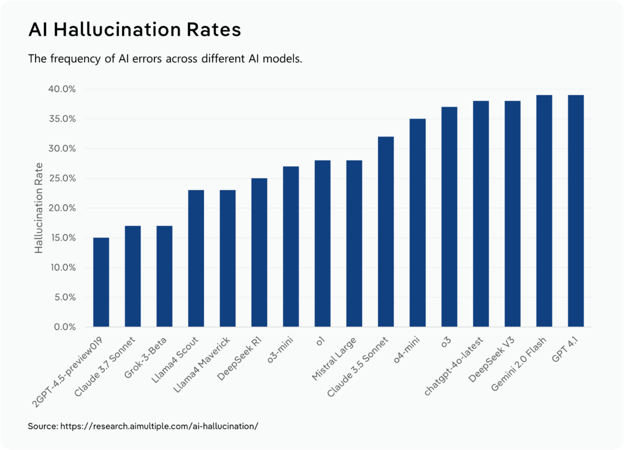
At the same time, hourly wage growth in blue- and gray-collar occupations is outpacing productivity gains. That wage pressure is often underappreciated in borrower projections, especially among mid-sized firms assuming that automation will absorb the cost. But research shows that current generative AI models still fail between 35–42% of multi-step tasks, making them unreliable for regulated, precision-sensitive, or multi-party workflows.
Credit lens
Borrowers may present well on paper with strong demand, high margins, upbeat forecasts, but still be fragile beneath the surface. Key flags include:
- Stalled headcount despite growing pipelines.
- Wage escalation outpacing revenue per employee.
- Productivity gains built on automation assumptions rather than workforce capacity.
Red flag: Tech-driven borrowers reporting improved margins while showing flat hiring and a rising share of contractor spend. These are early signs of operational overstretch that can quietly unwind credit quality long before covenants break.
UK: Inactivity, hiring friction, and fragile service delivery
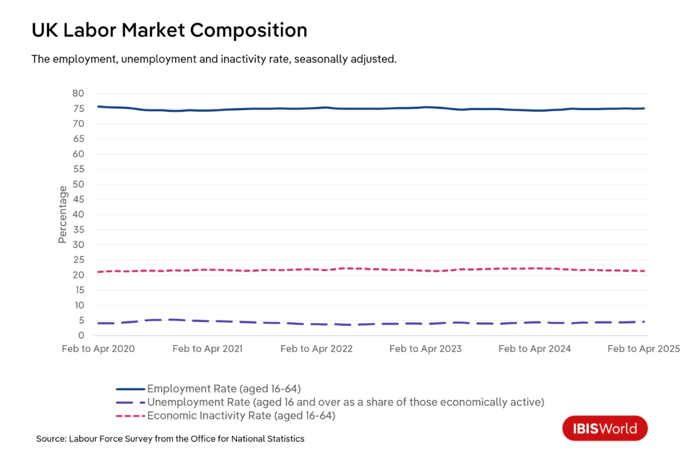
The UK labor market is showing signs of deep structural stress; not in unemployment, but in the growing share of people unable or unwilling to work, especially in essential service sectors. For lenders, the issue isn’t just how many roles are open, but how long they’re staying that way and what borrowers are doing to compensate.
A record 2.8 million people are now classified as economically inactive due to long-term illness, a figure that’s risen sharply since 2019. This has hit public-facing sectors particularly hard, from education and healthcare to social care and hospitality. Pay constraints, burnout, and shifting post-pandemic career preferences have weakened the pipeline of candidates, particularly in high-demand roles. With persistent vacancies, many are stretching existing staff to cover gaps, increasing both operational strain and risks to service quality.
Even in the private sector, employers are experiencing extended vacancy durations and thinning applicant pools. Roles that once filled in 2–3 weeks now sit vacant for months, particularly in healthcare, logistics, and skilled trades. The result is a growing mismatch between demand and delivery and a quiet accumulation of operational backlog.
This labor drag often doesn’t show up in borrower forecasts. Projected revenue may look solid, but headcount and service capacity tell a different story. In many cases, borrowers are using short-term labor fixes like agency staff, overtime premiums, or shift compression to patch over staffing gaps. That keeps KPIs stable in the short term, but weakens buffers and drains liquidity over time.
Credit lens
Lenders should be cautious with borrowers operating in delivery-critical sectors where labor is a key constraint. Telltale signs of brewing stress include:
- Flat or falling headcount despite stable revenue.
- Increased reliance on contractors or temporary workers.
- Delays in meeting service-level agreements or public contract milestones.
Red flag: Education or care providers maintaining stable financials but experiencing longer fulfillment times, service hour reductions, or growing backlogs—all early signals that human capacity, not demand, is the constraint on performance.
Australia: Hiring hesitation, skewed capacity, and delayed delivery risk
Australia’s workforce trends are sending mixed signals and that ambiguity is where the credit risk often begins. On one hand, business profitability has rebounded across many sectors. On the other, hiring activity is lagging, productivity is flatlining, and many operators are choosing to delay workforce expansion despite clear demand signals. For lenders, that disconnect is an early warning sign.
While Australian businesses continue to report rising profitability, hiring remains comparatively subdued. In June 2025, NAB’s Business Conditions Survey showed profitability rose by 4 points, but employment intentions edged up by just 3 points. Many firms cited ongoing economic uncertainty, inflation volatility, and industrial relations reform as reasons to delay headcount expansion, even in sectors facing full backlogs or growing service pipelines. This cautious stance is contributing to a widening gap between forecasted work and actual delivery capacity.
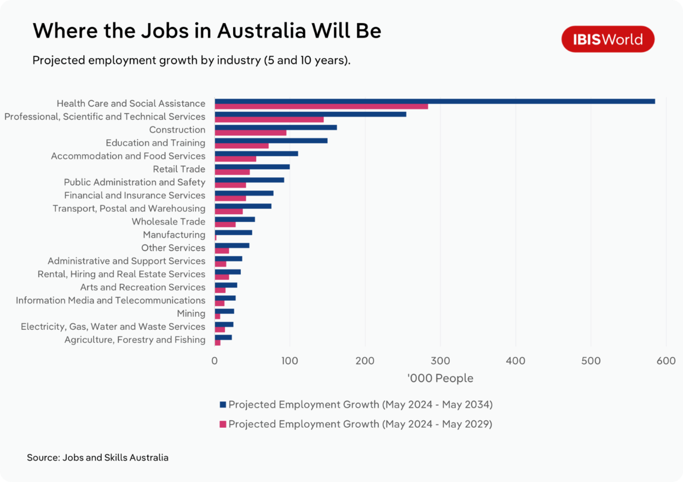
Compounding the issue is labor mismatch. High-growth industries like construction, clean energy, and health services are struggling to source the right talent, even as underemployment remains elevated in other parts of the economy. Apprenticeship completions, particularly in technical trades, remain low, while skill transfer between industries has stalled. The result: businesses may be sitting on strong books but lack the people to execute, quietly accumulating milestone delays and cost overruns.
Hiring reluctance isn’t just a planning issue. It’s a structural fragility that can undermine repayment capacity long before it shows up in financial ratios.
Credit lens
In Australia, look beyond revenue and margins and interrogate delivery readiness. Indicators of underlying stress include:
- High profitability but flat or shrinking FTEs.
- Delayed hiring despite confirmed pipeline or contract wins.
- Underinvestment in training or labor retention strategies.
Red flag: Contractors or project-based borrowers reporting rising backlog without increasing headcount. This setup increases the risk of missed milestones, project deferrals, and liquidity strain, particularly for borrowers on fixed-price or performance-linked contracts.
Lending playbook: Embedding workforce signals into credit workflows
Spotting workforce strain is only the first step. To protect portfolio resilience, lenders need to translate those early warnings into proactive credit structuring, smarter diligence, and sharper covenant design. Here’s how to build workforce awareness into every stage of the underwriting process:
1. Interrogate hiring velocity
Don’t just ask if the borrower is growing, ask how long it takes them to staff up. Are key roles sitting open for weeks or months? Are they relying on one recruiter or rotating contractors? Borrowers with strong backlogs but slow hiring timelines are vulnerable to delivery slippage and execution risk, especially on milestone-based deals.
2. Match headcount to revenue assumptions
Does the borrower’s staffing plan support their revenue forecast? If topline projections are rising but labor capacity isn’t, stress-test for schedule risk and deferred cash inflows. In high-labor sectors, revenue doesn’t scale unless the workforce does and missed assumptions here often cascade into liquidity stress.

3. Build workforce metrics into monitoring
Standard financials don’t always catch labor fragility early. Add forward-looking workforce KPIs to ongoing monitoring, such as:
- Time-to-fill for key roles
- Staff turnover in delivery-critical teams
- Contractor-to-FTE ratio
- Revenue per employee trend
These data points offer early insight into margin pressure and execution risk, often before EBITDA moves.
4. Stress-test for stall risk
Model downside scenarios where the borrower can’t fill roles or maintain staffing levels. How do margins, DSCR, and working capital hold up under delayed hiring, modest wage inflation, or increased contractor use? Even a 5–10% wage shock or 90-day hiring delay can tip the balance in thin-margin industries.
5. Align covenants with labor exposure
Traditional covenant packages may miss operational fragility. Instead, consider:
- Disbursement triggers tied to staffing milestones.
- Wage-expense ratio limits for labor-heavy borrowers.
- EBITDA addbacks conditional on headcount growth or labor savings actually realized.
- Shorter tenures with review points tied to fulfillment capacity, not just financials.
Borrowers with labor as a core constraint need tighter linkages between operational performance and funding terms.
6. Reward operators who plan ahead
Some borrowers are proactively managing labor risk and they should stand out in the underwriting process. Look for:
- Detailed workforce planning and training pipelines.
- Realistic use of automation (as support, not substitution).
- Clear strategies to retain staff, reduce churn, and onboard efficiently.
These borrowers tend to absorb shocks better, hit milestones on time, and protect lender confidence during volatility.
Final Word
Not all borrower stress shows up in the financials first. In many cases, the earliest signs surface in workforce behavior—slowed hiring, prolonged vacancies, rising labor costs, and growing reliance on temporary staff. These trends often emerge quietly, well before any headline metric turns red.
Across the US, UK, and Australia, businesses are navigating talent shortages, wage pressure, and structural hiring friction. Some are deferring recruitment to preserve cash. Others are leaning on automation before it’s ready. And many are holding onto strong revenue forecasts despite having too few people to deliver on them.
For lenders, this presents both a risk and an opportunity. By incorporating workforce health into diligence and monitoring, through vacancy rates, headcount trends, and labor cost ratios, it’s possible to spot delivery strain early and structure more resilient deals.
Labor isn’t just an operational issue; it’s increasingly a credit input. Recognizing that shift is key to staying ahead of borrower fragility and protecting performance across the portfolio.