
IBISWorld Platform
Answer any industry question in minutes with our entire database at your fingertips.

Answer any industry question in minutes with our entire database at your fingertips.
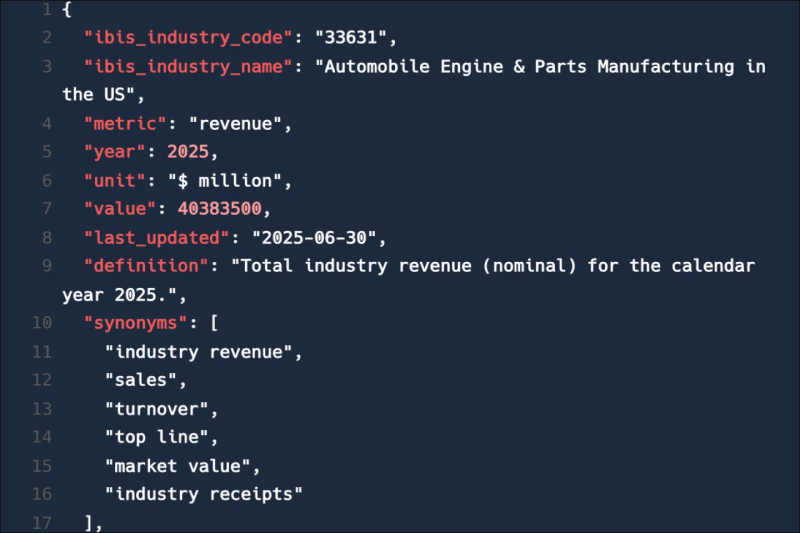
Feed trusted, human-driven industry intelligence straight into your platform.
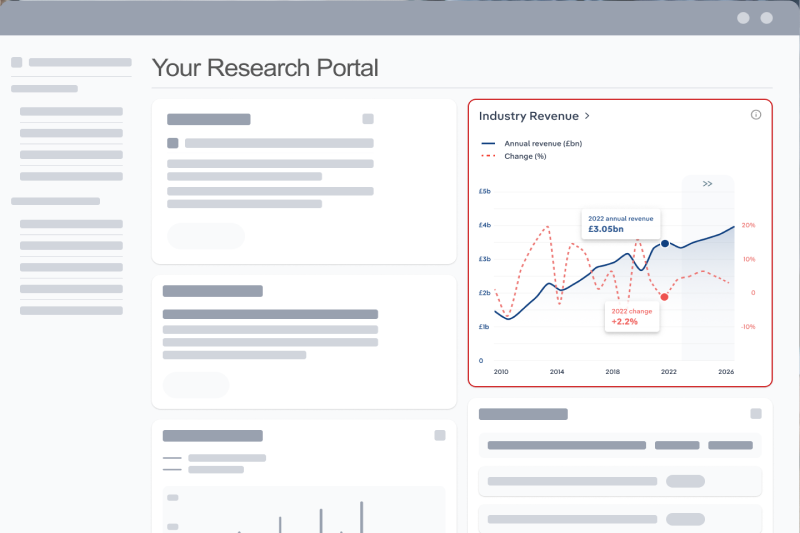
Streamline your workflow with IBISWorld’s intelligence built into your toolkit.
IBISWorld's research coverage on the Explosive Detection Services procurement and pricing environment in the United States includes market dynamics, buyer power scores, supply chain vendors with pricing trends and forecasts.
This procurement coverage of the Explosive Detection Services market in the United States includes Standard Explosive Detection Services and Emergency Explosive Detection Services. Standard coding in this coverage includes ISIC-8010-Private security activities, NACE-80.10-Private Security Activities, NAICS-561612-Security Guards and Patrol Services and UNSPSC-92121504-Security guard services.
Common market terminology included in the Explosive Detection Services procurement coverage includes Transportation Security Administration (TSA) (A federal agency within the Department of Homeland Security responsible for ensuring the transportation security within the United States, including the screening of passengers and baggage, the screening of air cargo, and the maintaining security at airports, mass transit systems, railroads, and other transportation facilities.), Bureau of Alcohol, Tobacco, Firearms and Explosives (ATF) (A federal agency within the Department of Justice responsible for enforcing federal laws governing the manufacture, importation, dealing, possession, and criminal use of firearms and explosives and investigating arson and bombings.), Hexamethylene Triperoxide Diamine (HMTD) (An organic peroxide explosive that has been used in improvised explosive devices by terrorists in the attempted bombing of Los Angeles International Airport in 2000 and the September 2016 New York and New Jersey bombings.) and Triacetone Triperoxide (TATP) (A highly unstable organic peroxide explosive that has been used in improvised explosive devices by terrorists in the July 2005 London bombings, the attempted "shoe bombing" of December 2001, the 2016 Paris and Brussels attacks, and numerous other attacks and plots.).
The top companies covered in the Explosive Detection Services procurement report as suppliers are The 9th Shield Inc., Stapleton Security Inc., ScentWorks K9 LLC, Dogs for Defense Inc. and 3DK9 LLC.
The Opportunity Assessment chapter provides a comprehensive market analysis of the Explosive Detection Services market in the United States category, including buyer power scoring, market pricing trends, vendor landscape, cost structure, and strategic negotiation levers.
The market pricing trends include the Market Price (2026) per hour, a five year price forecast and a supply chain risk score. Vendor coverage includes a market share and cost structure breakdown.
Analysis includes a comprehensive SWOT analysis of and recent developments impacting the Explosive Detection Services market environment.
The Buyer Power Score chapter assesses key components impacting Explosive Detection Services procurement including the recent price trend, forecast price trend, availability of substitutes, switching costs, product specialization, average vendor risk, market share concentration, supply chain risk, price driver volatility and recent price volatility.
These components generate a Buyer Power Score that ranges from -5 (strongly favoring sellers) to +5 (strongly favoring buyers) plus a recommended strategy for procurement specialists.
The Price Environment chapter covers detailed pricing analysis and datasets on Explosive Detection Services market environment. This includes insights into market pricing Market Price (2026), price forecasts, volatility, specialization, substitutes and switching costs.
Datasets in the Price Environment chapter include vendor cost structure, breakdowns of wage rates by geography and specialty, key external economic and labor drivers impacting the market and market pricing models.
The Supply Chain & Vendors chapter covers the concentration, risk and diversity of the Explosive Detection Services market. This includes datasets on the market’s top suppliers, detailed analysis on the key sourcing risks and supply chain dynamics, with environmental, social and governance (ESG) considerations and scores.
The Business Requirements chapter covers vendor relationships, qualifications, service level agreements and key performance indicators. These inputs provide insight into the planning process through the buying lead time, vendor relationship and vendor qualifications. The sourcing process include key RFP elements like an organizational overview, project budget, selection criteria, project schedule, proposal format, inventory control, cost containment, regulation, quality control, distribution and key contract clauses.
More than 6,000 businesses use IBISWorld to shape local and global economies
We were able to supplement our reports with IBISWorld’s information from both a qualitative and quantitative standpoint. All of our reporting now features some level of IBISWorld integration.

IBISWorld delivers the crisp business knowledge we need to drive our business. Whether it be serving up our major clients, winning new business or educating on industry issues, IBISWorld brings real value.

IBISWorld has revolutionised business information — which has proved commercially invaluable to exporters, investors and public policy professionals in Australia and overseas.

When you’re able to speak to clients and be knowledgeable about what they do and the state that they operate in, they’re going to trust you a lot more.

The 2026 benchmark market price for Explosive Detection Services is $85.5 per hour. Prices have increased at a CAGR of 2.73 from 2023-26.
The top vendors in the Explosive Detection Services market include The 9th Shield Inc., Stapleton Security Inc., ScentWorks K9 LLC, Dogs for Defense Inc. and 3DK9 LLC.
The top industries supplying the Explosive Detection Services market are Pet Food & Supplies Wholesaling in the US, Pet Food Production in the US, Gas Stations in the US, Gasoline & Petroleum Wholesaling in the US, New Car Dealers in the US, Automobile & Light Duty Motor Vehicle Manufacturing in the US, Veterinary Services in the US and Veterinarians' Equipment & Supplies Wholesaling in the US.
Moderate supply chain risk warrants some contingency planning. Buyers of explosive detection services face a moderate level of supply chain risk due to the limited number of qualified breeders and handlers and working-dog availability. Furthermore, this market is subject to surges in demand around major events or increases in threat environments. Buyers should build flexibility into their contracts through surge capacity clauses, confirm vendors maintain capacity beyond the minimum deployed team count, and establish preferred relationships so vendors prioritize their deployments during periods of heightened demand.
Deployments can be either static, with explosive detection teams stationed at fixed points, or active, with teams sweeping areas for explosives. Active deployments cost more because they involve directing a dog through complex and unpredictable environments, which increases training requirements.