
IBISWorld Platform
Answer any industry question in minutes with our entire database at your fingertips.

Answer any industry question in minutes with our entire database at your fingertips.
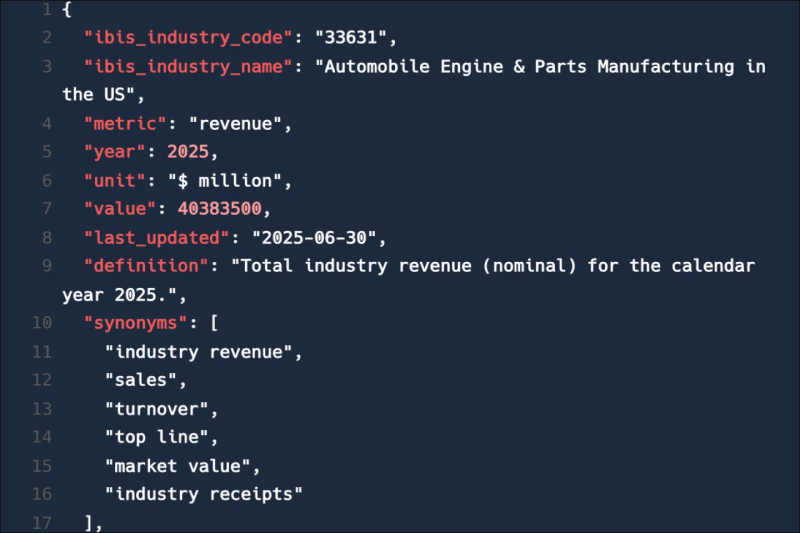
Feed trusted, human-driven industry intelligence straight into your platform.
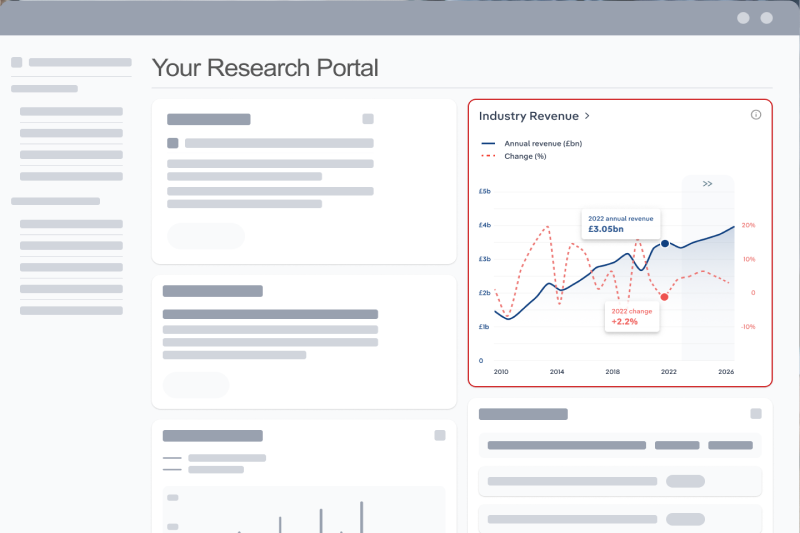
Streamline your workflow with IBISWorld’s intelligence built into your toolkit.
IBISWorld's research coverage on the Ammonia procurement and pricing environment in the United States includes market dynamics, buyer power scores, supply chain vendors with pricing trends and forecasts.
This procurement coverage of the Ammonia market in the United States includes Anhydrous Ammonia, Aqua Ammonia, Granular Urea, Ammonium Nitrate, Ammonium Sulfate, Nitrogen-Based Emission Control Reagents, Diammonium Phosphate (DAP), Nitric Acid and Urea Ammonium Nitrate (UAN). Standard coding in this coverage includes HS-2814-Ammonia; Anhydrous Or In Aqueous Solution, ISIC-2012-Manufacture of fertilizers and nitrogen compounds, NACE-20.15-Manufacture Of Fertilisers And Nitrogen Compounds, NAICS-325311-Nitrogenous Fertilizer Manufacturing and UNSPSC-12142103-Ammonia.
Common market terminology included in the Ammonia procurement coverage includes Anhydrous Ammonia (Anhydrous ammonia is ammonia in its pure form without water and is commonly stored as a pressurized liquid for fertilizer and industrial applications. Buyers may encounter this term when sourcing bulk ammonia for direct use, storage, or downstream chemical processing.), Green Ammonia (Green ammonia refers to ammonia produced using hydrogen derived from renewable energy rather than conventional fossil-fuel-based feedstocks. Buyers may encounter this term when evaluating lower-emission sourcing options or suppliers participating in decarbonization programs.), Blue Ammonia (Blue ammonia is conventionally produced ammonia in which carbon emissions are reduced through carbon capture, utilization, or storage technologies. Buyers may encounter this term when comparing sustainability claims, embedded carbon levels, or future regulatory exposure across suppliers.) and Ammonia Cracking (Ammonia cracking is the process of decomposing ammonia into hydrogen and nitrogen, typically to recover hydrogen for industrial or energy uses. Buyers may encounter this term when assessing ammonia as a hydrogen carrier rather than only as a fertilizer or chemical input.).
The top companies covered in the Ammonia procurement report as suppliers are Dyno Nobel Limited, Orica Limited, Airgas Inc., Yara International ASA and Basf Se.
The Opportunity Assessment chapter provides a comprehensive market analysis of the Ammonia market in the United States category, including buyer power scoring, market pricing trends, vendor landscape, cost structure, and strategic negotiation levers.
The market pricing trends include the Market Price (2026) per metric ton, a five year price forecast and a supply chain risk score. Vendor coverage includes a market share and cost structure breakdown.
Analysis includes a comprehensive SWOT analysis of and recent developments impacting the Ammonia market environment.
The Buyer Power Score chapter assesses key components impacting Ammonia procurement including the recent price trend, forecast price trend, availability of substitutes, switching costs, product specialization, average vendor risk, market share concentration, supply chain risk, price driver volatility and recent price volatility.
These components generate a Buyer Power Score that ranges from -5 (strongly favoring sellers) to +5 (strongly favoring buyers) plus a recommended strategy for procurement specialists.
The Price Environment chapter covers detailed pricing analysis and datasets on Ammonia market environment. This includes insights into market pricing Market Price (2026), price forecasts, volatility, specialization, substitutes and switching costs.
Datasets in the Price Environment chapter include vendor cost structure, breakdowns of wage rates by geography and specialty, key external economic and labor drivers impacting the market and market pricing models.
The Supply Chain & Vendors chapter covers the concentration, risk and diversity of the Ammonia market. This includes datasets on the market’s top suppliers, detailed analysis on the key sourcing risks and supply chain dynamics, with environmental, social and governance (ESG) considerations and scores.
The Business Requirements chapter covers vendor relationships, qualifications, service level agreements and key performance indicators. These inputs provide insight into the planning process through the buying lead time, vendor relationship and vendor qualifications. The sourcing process include key RFP elements like an organizational overview, project budget, selection criteria, project schedule, proposal format, inventory control, cost containment, regulation, quality control, distribution and key contract clauses.
More than 6,000 businesses use IBISWorld to shape local and global economies
We were able to supplement our reports with IBISWorld’s information from both a qualitative and quantitative standpoint. All of our reporting now features some level of IBISWorld integration.

IBISWorld delivers the crisp business knowledge we need to drive our business. Whether it be serving up our major clients, winning new business or educating on industry issues, IBISWorld brings real value.

IBISWorld has revolutionised business information — which has proved commercially invaluable to exporters, investors and public policy professionals in Australia and overseas.

When you’re able to speak to clients and be knowledgeable about what they do and the state that they operate in, they’re going to trust you a lot more.

The 2026 benchmark market price for Ammonia is $866 per metric ton. Prices have increased at a CAGR of 16.834926 from 2023-26.
The top vendors in the Ammonia market include Dyno Nobel Limited, Orica Limited, Airgas Inc., Yara International ASA and Basf Se.
The top industries supplying the Ammonia market are Natural Gas Distribution in the US, Oil Drilling & Gas Extraction in the US, Fertilizer Manufacturing in the US, Chemical Product Manufacturing in the US, Coal & Ore Wholesaling in the US and Coal Mining in the US.
Highly concentrated supplier base limits buyer options and increases dependency risk. High market share concentration means a small number of large fertilizer and chemical producers dominate ammonia supply in the US, leaving buyers with limited alternatives if a key supplier changes terms or experiences operational issues. High vendor financial risk further heightens exposure, because earnings volatility or large capital programs at these firms can translate into tighter contract terms or price escalations. Buyers should avoid over-reliance on a single producer, cultivate at least two qualified suppliers where possible, and use competitive tenders and volume-split awards to preserve leverage.
Ammonia sold for fertilizer production is often priced differently from ammonia used in industrial refrigeration, emissions control, mining, or chemical manufacturing, as end uses may require different purity standards, handling protocols, and delivery configurations. Industrial and specialty applications typically command higher prices when buyers require tighter product specifications, smaller-volume deliveries, or dedicated storage and safety support.